A model that places medical knowledge in the hands of the communities themselves.
The primary healthcare system in Nigeria's northeast operates under enormous strain. Facility-to-population ratios are among the lowest in the country, staff retention is challenged by insecurity, and supply chains are disrupted by conflict. In this environment, waiting for a formal health worker to arrive is not always an option.
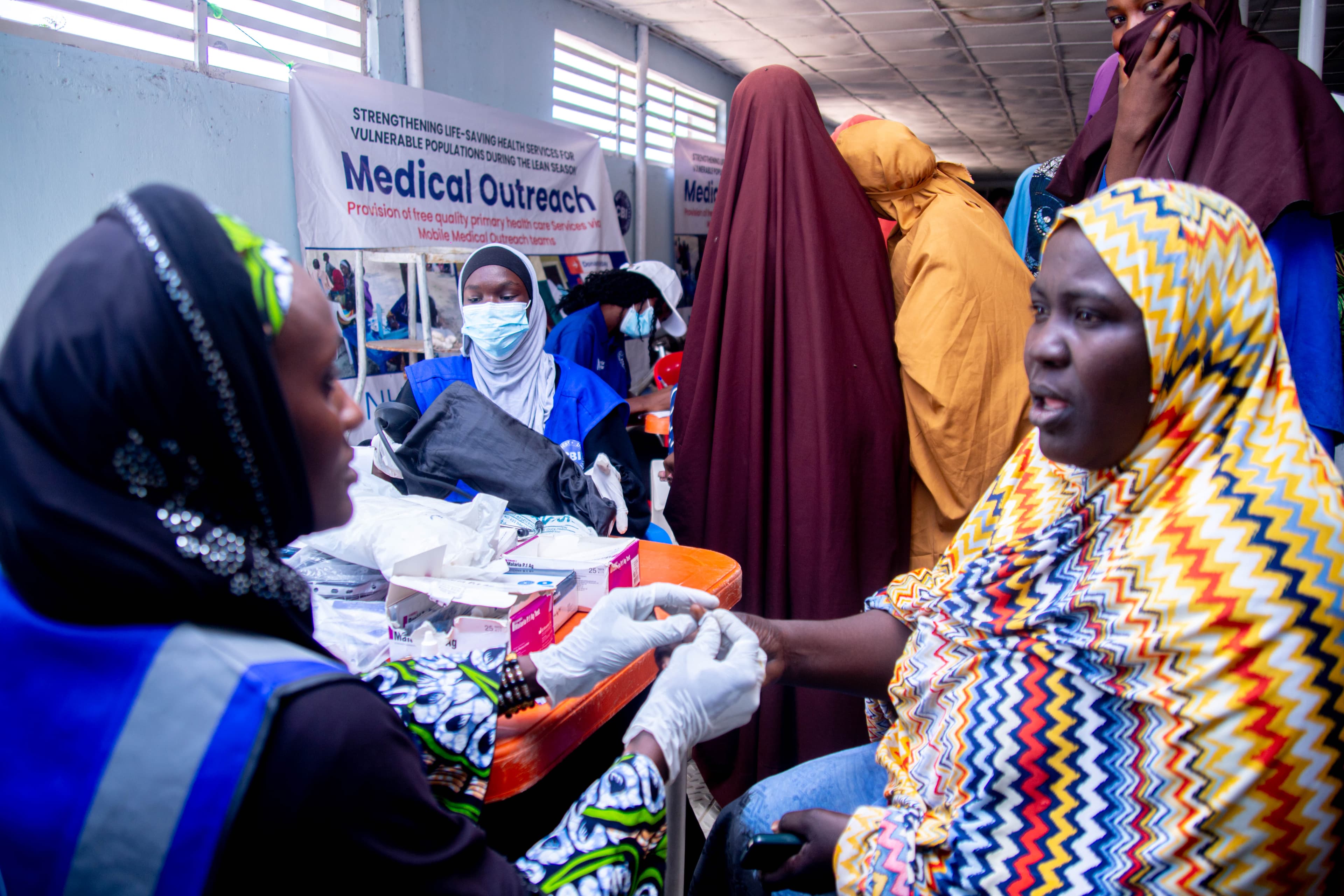
CBI's community health worker (CHW) programme takes a different approach: train trusted community members — mothers, teachers, religious leaders — to identify danger signs, provide basic first aid, refer cases, and promote health-seeking behaviour within their own neighbourhoods. In 2024, we trained 54 community health workers across Borno, Adamawa, and Yobe States.
The training covers a standardised 12-day curriculum developed with support from national health authorities. Topics include integrated management of childhood illness (IMCI), maternal danger signs, malnutrition screening using MUAC tape, oral rehydration therapy, malaria prevention, and basic wound care. Each CHW receives a community health kit and regular supportive supervision from CBI clinical staff.
The results have been measurable. In communities where CBI CHWs are active, referral rates to primary health facilities increased by 62%, and the average time between symptom onset and treatment-seeking dropped from 4.8 days to 1.9 days. Crucially, CHWs identified and referred 214 severe acute malnutrition cases that may otherwise have gone undetected.
"When a child is sick in the night, I go," said Hauwa, a CHW in Maiduguri. "I don't wait for the clinic to open. I check the child, I call the family, I write it down, and if it is serious, we go together." This is the kind of frontline presence no health system can buy — it grows from community trust, and CBI is committed to nurturing it.